One laptop or two: separating work from the rest of your life
 RUTH WILLIAMS·5 min read·June 5, 2026
One laptop for work and private life is cheaper and worse. The cost does not appear for three years, which is why most people accept it.
The machine that followed him to the sofa
Daniel bought one laptop and used it for client work, invoices, films, and banking. By the third year it never left the flat’s main room.
The problem was not performance. It was that the same screen showed a client’s file at four and a bank balance at eleven, with no change in posture.
He would finish a call and open a personal tab without moving. The machine made the switch free, and free switches are the ones that never register as a decision.
What one machine saves
The savings are real and easy to list. One charger, one bag, one set of files, and no question about which machine holds the current version of anything.
He also saved about eight hundred pounds, which is the number that kept him on one machine for two extra years. That number was correct and incomplete.
What it left out was the cost of a device that has no off switch in his head. A shared machine keeps every obligation in one place, including the ones with no deadline.
The login that stopped working
The first concrete failure was administrative. A client required two-factor authentication on a managed device, and his personal laptop did not qualify.
He could have installed a work profile and separated the accounts on one disk. That would have solved the login and left the sofa problem untouched.
This is the usual shape of the single-machine argument. It gets settled on technical grounds while the daily habit that caused it stays in place.
Notifications at half past nine
The habit he actually wanted to break was the evening check. On one machine, the work account sat logged in beside everything else, one click away.
He tried muting the account at eight and managed it for nine days. Muting is a setting, and settings get changed back at the moment of weakest resistance.
A second machine does not rely on his discipline at nine at night. It relies on the work machine being in another room, closed, which is a physical fact.
The second-hand machine
In April he bought a three-year-old business laptop for two hundred and forty pounds. It has a dull screen and a keyboard that has been used hard.
The specification is modest and adequate for writing, tickets, and calls. He deliberately did not buy something good, because good would have invited personal use.
The old machine became the personal one, which meant the personal machine got worse. That downgrade is part of the cost and he counted it as acceptable.
Two machines on one desk
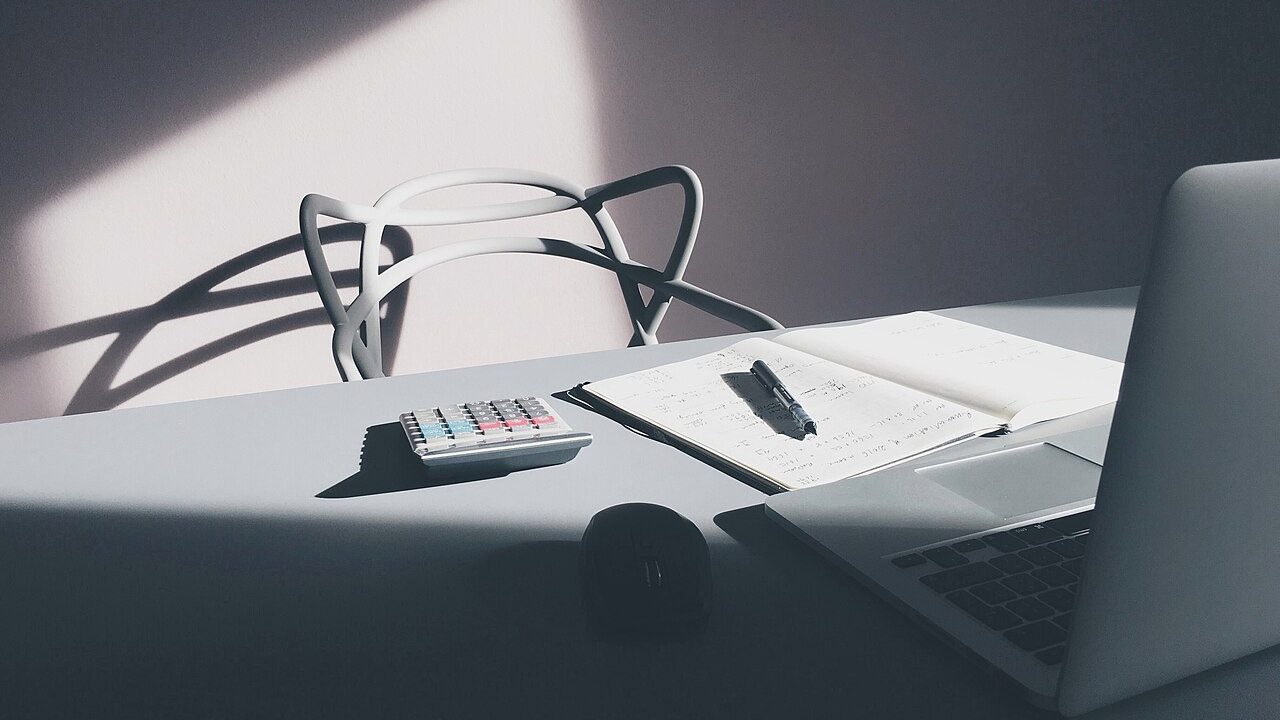
Both machines live on a desk that is barely wide enough, which works only because one is usually shut. The work machine sits on a stand at eye level.
The personal machine lives on the left, closed, and comes out after the work one goes away. Two lids mean he can see at a glance which mode the room is in.
The extra space is the hidden cost. On a smaller desk, the second machine would have forced a choice he was not ready to make.
The cable problem
Two machines mean two chargers, and for a month both were plugged into the same strip under the desk. The strip had six sockets and no spare.
He solved it with a single charger that lives in a drawer and moves between machines. That works because he charges once a day, not continuously.
The cable is now the most-handled object in the setup and the first to fail. He has replaced it twice, which is a cost nobody mentions.
What he still does on the work machine
The separation is not total. He still reads the news on the work machine while a build runs, and he still checks personal mail there occasionally.
The rule he keeps is about the evening, not about purity. Anything after seven happens on the personal machine or not at all.
That single line covers most of what he wanted. Perfect separation would have cost him the convenience that makes one desk workable.
The backup he nearly lost
In June the personal machine’s drive failed after four years, and the last backup was eleven months old. Nothing important was on it except photographs.
The work machine had automatic backups because the client required them in writing. The personal one had nothing, because nobody was enforcing anything on it.
Two machines split the risk as well as the attention. He recovered the photographs from a phone, which is not a backup plan.
The honest cost
He spent two hundred and forty pounds, one weekend of setup, and about twenty minutes a month on updates. That is the whole bill in money and time.
The cost he did not anticipate was desk space, which is the scarcest thing in a small flat. The second machine took a third of the surface for most of the day.
On balance he would do it again, and he would buy the cheap one sooner. The delay was not caution; it was the belief that one machine was a virtue.
The weekend both were closed
The test came in August, when he took four days off and left both machines shut in a drawer. He expected to feel untethered and felt nothing at all.
That absence of feeling is the result he was paying for. With one machine, the drawer would have held his work and his evening in the same box.
He noticed the difference on the Monday, when opening the work machine felt like arriving somewhere. That small arrival is what the second machine bought.
Who should keep one machine
Anyone whose work ends at a fixed hour and whose flat has a door should keep one machine. The separation is already being done by the room.
The second machine earns its place when work arrives at unpredictable hours or when a client imposes device rules. It is a response to a constraint, not an upgrade.
Daniel’s constraint was a sofa, which is not a rule anyone can enforce. He built the rule himself, and it cost him a desk and two hundred pounds.
Given that Daniel solved a room problem with a purchase, what is a second-hand laptop actually worth as a substitute for a wall?