Why moving the microphone closer beats buying a better one
 RUTH WILLIAMS·5 min read·July 9, 2026
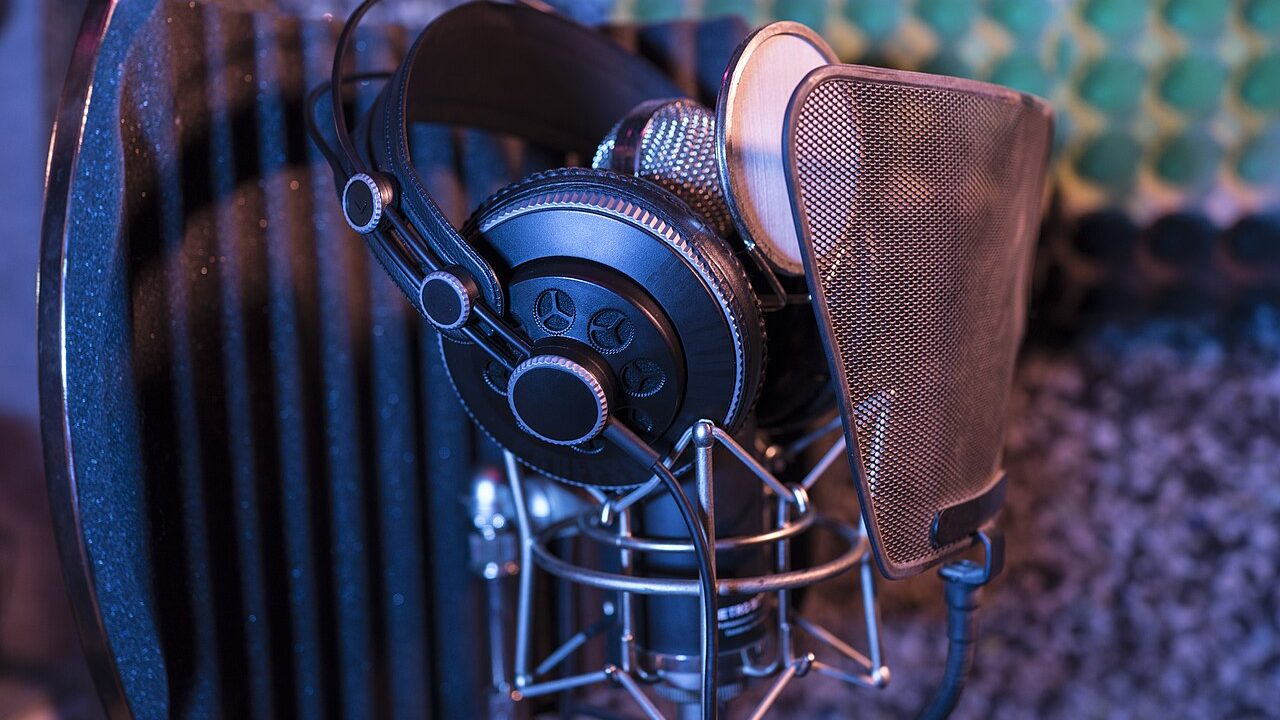
A microphone thirty centimetres from the mouth beats a two-metre microphone at any price. Distance is what lets the room into the recording.
The two recordings that settled it
Dan recorded the same support call twice, once on a borrowed condenser and once on his own cheap dynamic. Both files were saved before he listened to either.
The condenser, placed beside the keyboard, picked up the stairwell and a neighbour’s television. His voice arrived with the room attached, thin and hollow.
The cheap microphone, held twenty centimetres away on a short arm, sounded closer to him than the expensive one did. That was the entire result, and it cost nothing.
What distance actually changes
Every reflection travels further than the direct sound, so it arrives later. The later it arrives, the more the ear treats it as separate.
Close speech is loud at the capsule, which means the reflections are quiet by comparison. Distance does not remove the room; it changes the ratio between voice and room.
Dan’s condenser sat about a metre away, so his voice and the stairwell arrived at similar strength. No filter or software setting can separate two sounds that loud.
Why the room arrives with the reflected sound
A hard room returns a copy of the voice from each surface, delayed by the extra path. A wall behind the desk sends one back within milliseconds.
That copy is not heard as an echo. It is heard as a tone colour, which is why a room can make a good voice sound wrong without sounding distant.
Dan’s room had a bare wall in front of him and a window behind. Both returned his voice to the microphone before he had finished the syllable.
The inverse square rule in a small room
Sound level falls with the square of distance, so halving the gap adds about six decibels. The reflections gain nothing when you move closer.
Six decibels is a lot in a room this size. It is the difference between a voice sitting above the noise floor and a voice buried in it.
Dan had been raising the gain to compensate, which lifted the room and the computer fan with him. Moving the microphone did the same job without the noise.
Where the desk layout forces the microphone
His desk was 120 cm wide and pushed into a corner, which left the screen off centre. A stand put the capsule near the keyboard, not his mouth.
The first fix was a longer boom arm clamped to the back edge of the desk. That moved the capsule twenty centimetres from his mouth.
The arm cost less than a tenth of the condenser. It changed the recording more than the condenser ever had, which was the uncomfortable part.
The arm that fixed more than the microphone
A boom arm also removes handling noise, because the desk no longer touches the microphone. Typing and mouse clicks stop travelling up the stand.
Dan noticed this before he noticed the room. The low thumps under every sentence disappeared, and he stopped apologising for them on calls.
The arm introduced its own problem: it creeps downward over a week. He retightens the joint each Monday, a small tax on the improvement.
Gain, noise floor, and the wrong fix
Before the arm, his answer to a quiet recording was more gain. Gain lifts everything, including the fan and the street, so the ratio never improves.
This is the trap that sells equipment. A noisy recording sounds like a weak microphone, so the first response is to buy a stronger one.
The stronger microphone arrived with the same room and the same fan. It reproduced both more faithfully, which Dan did not experience as an upgrade.
What the expensive microphone did well
To be fair to it, the condenser captured detail that the cheap capsule smeared. Sibilance was cleaner, and quiet consonants at the end of words survived.
That detail only matters when the room is quiet enough to hear it. In Dan’s flat it arrived mixed with the stairwell, reading as brightness rather than accuracy.
He kept it for recording music at weekends, in a treated corner of another room. For calls, the cheap dynamic does more of the work.
The case for a dynamic capsule up close
A dynamic capsule rejects more of what is off to the side, and it tolerates being spoken into directly. Both traits suit a room that cannot be fixed cheaply.
It also refuses to flatter. Dan’s voice sounds flatter on it than on the condenser, with less air at the top, and he has stopped caring.
The trade is detail for isolation, and isolation is what a shared building rewards. This is the exchange most home setups should be making first.
When close does not save you
There is a limit, and Dan found it when the heating came on. Close placement cannot outrun a noise source that is louder than the voice itself.
He measured the room during a call and found a low rumble under everything, steady and unmusical. The microphone was working correctly and reporting a bad environment.
That is the point at which equipment stops helping. He moved the desk away from the radiator and gained more than any purchase gave him.
The cost of the workaround
Speaking into a microphone twenty centimetres away constrains the body. Dan cannot lean back, and he has to keep his head inside a small window of positions.
He solved it by raising the chair and tilting the arm, which brought the capsule to his mouth. The fix took an afternoon.
The visible cost is a black arm in the corner of the video frame. He angles it out of shot, so it is never quite where his voice is.
What to measure before buying
Record thirty seconds at the distance you actually sit, then listen on headphones at low volume. Room problems are obvious at low volume and hidden at high volume.
Then record the same words with the microphone half as far away. If the improvement is large, the room is the problem and the capsule is not.
Dan did this after the purchase, which is the wrong order. The test costs nothing and would have sent him to the arm first.
If a twenty-pound arm can beat a three-hundred-pound capsule in an untreated room, what is the actual price of the microphone you were about to buy?