One window, two directions: where the key light should sit
 RUTH WILLIAMS·5 min read·August 16, 2026
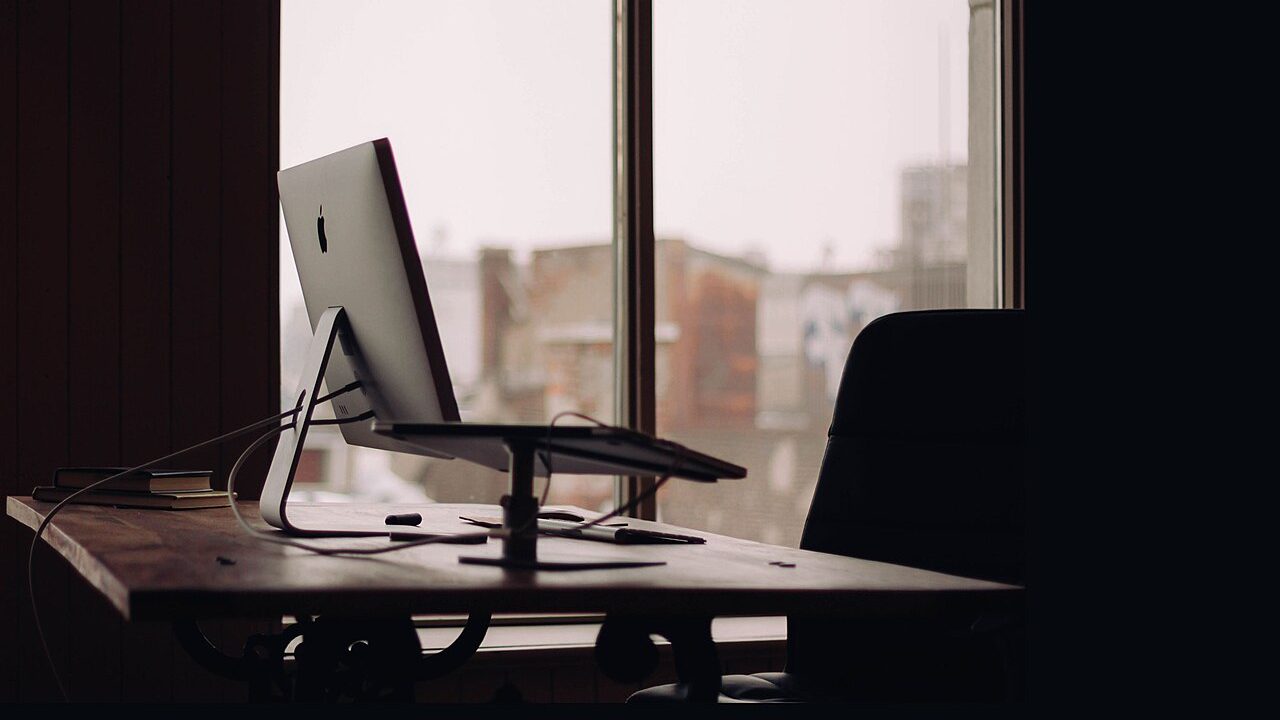
A single window should be in front of you, not behind you, unless you enjoy being a silhouette. The direction of the light matters more than its size.
The room with one window
Rosa’s spare room is 2.8 m by 2.2 m, with one window on the long wall and a door opposite. The desk faced the door, so the window sat at her left shoulder.
That arrangement felt correct for the room and wrong for the camera. Half her face was lit and half was not, with a hard line down the nose.
She had assumed the window was too small to matter. At 90 cm wide it was small, and it was still the only light source in the room.
What a window in front does to a face
Light from in front falls evenly across the forehead, cheeks and chin, and the nose casts only a short shadow. The face reads as one object rather than two.
It also puts a bright rectangle directly in the camera’s view if the window is at eye level. That rectangle competes with the face for the sensor’s attention.
Rosa’s window started at waist height, which helped. The light arrived on her face without the glass appearing in the frame behind her shoulder.
What a window behind does to a face
With the window behind, the camera sees a bright field and a dark subject. Automatic exposure protects the window and lets the face fall into shadow.
This is the silhouette problem, and no amount of fill light fully solves it. You are asking a small sensor to hold two brightnesses that are far apart.
The effect is not flattering in the way people expect. It looks like a witness statement rather than a conversation, and it makes the room look deeper than it is.
Why the camera exposes for the window
A webcam meters the whole frame and averages, so a bright window drags the average up. The face is then rendered darker than the eye would render it.
The eye compensates because it moves and adapts across a scene. A camera makes one decision for the entire rectangle and cannot recover the difference.
Rosa’s first call had her face at the same brightness as the wall behind the desk. Colleagues asked whether her camera was broken.
The first test recording
She recorded two minutes facing the window and two minutes with it behind her. She watched both on a phone screen, which is how most colleagues would see her.
The difference was larger than the difference between two cameras she had tested. Lighting moved the result further than the hardware did, which was not what she expected.
She also noticed that the facing-window version had flatter shadows under the eyes. The behind-window version had none at all, which was worse.
Turning the desk ninety degrees
The desk could not move to the window wall, because the door swung into that space. She turned it ninety degrees, so the window sat in front.
The new position put her back to a plain wall, which gave the camera a dull background. That turned out to be an advantage rather than a compromise.
The desk now blocks part of the radiator, so the room heats unevenly in winter. Every layout decision in a small room removes something else.
Bouncing light off a pale wall
Facing the window put the light source slightly to one side, which left a shadow on the far cheek. She hung a white board on the opposite wall to catch spill.
The board is 60 by 90 cm and cost very little. It lifted the shadow side by enough to make the face read as evenly lit.
A white wall would have done the same job if the room had one. Rented flats rarely offer a bare pale surface in the right place.
The problem with a window at your back
Colleagues with windows behind them are the most common version of this problem. They sit with a bright field behind and a face that needs rescuing.
Software fill can raise the face, but it raises the noise in the shadow at the same time. The result is a brighter, grainier version of the same unbalanced frame.
Turning the desk is usually cheaper than buying a light. It is also the option people try last, because it means moving furniture.
Curtains, sheers, and diffusion
Direct sun through glass is harsher than the same window on an overcast day. A sheer curtain turns the window into a large, soft source without blocking the view entirely.
Rosa added a sheer panel across half the width and kept the rest clear. The lit side of her face softened and the shadow line stopped being visible.
Heavy curtains would have been better for the evening sun and worse for the morning. She needed the light at nine, not at seven.
Colour temperature at both times of day
Morning light through her window is cool, and the room’s ceiling bulb is warm. Mixing them produced a face that was blue on one side and yellow on the other.
She switched the bulb to a neutral white and stopped using it during daylight. The window became the only source, which made the colour consistent.
In winter the window is dim by three in the afternoon, so the bulb comes back on. That is the point at which the setup stops being free.
The cost of the better direction
Facing the window means facing a wall of glass, which is distracting when the street is busy. She notices delivery vans more than she used to.
It also means the camera looks toward daylight, so the room behind her is under lit. Anyone walking past sees a dim corridor rather than a room.
Both costs are real and both are smaller than looking like a shadow. She has kept the arrangement for eight months without changing it.
What to check before moving furniture
Sit where you intend to sit and hold a phone camera at eye height. Look at the frame for a bright rectangle and a dark face.
Then check whether the desk can turn without blocking a door, a radiator or a walking route. The lighting fix fails if the room stops working.
Rosa’s move took ninety minutes and one extension cable. It did more for her calls than the camera she had been researching for a month.
If one window can be made to work by turning a desk, why do so many people buy a light before they try the cheaper move?