Virtual background or a real wall: which is less work
 RUTH WILLIAMS·5 min read·August 27, 2026
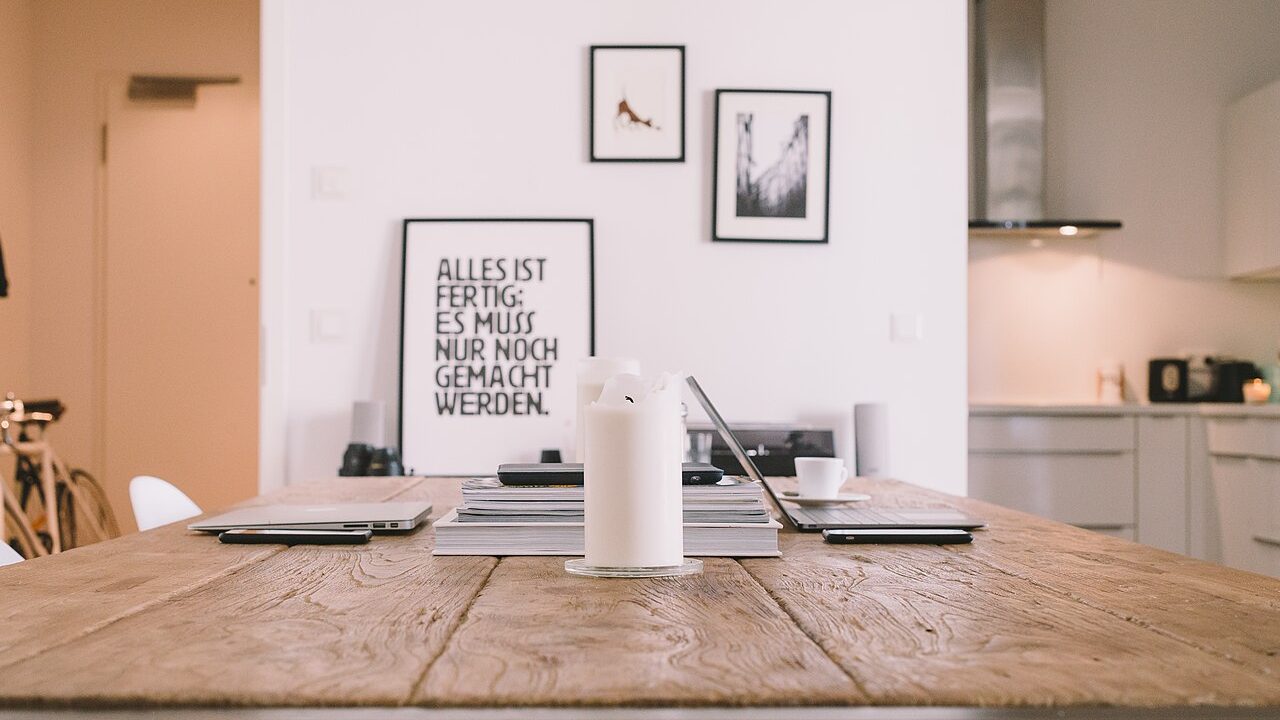
A real wall is less work than a virtual background once you count the setup, and it looks more like a person in a room. The blur is a patch, not a solution.
The year of the blur
Iris worked from a studio flat where the bed sat behind her chair. She turned on background blur on the first day and left it on for a year.
It solved the immediate problem, which was a duvet in the frame during a client call. It created a slower problem she did not notice for months.
Her own recordings looked slightly wrong to her, and she could not say why. She assumed it was the camera and started researching replacements.
What the blur actually costs the image
Blur is computed from an estimated depth map, and the estimate is wrong at edges. Hair, glasses and chair backs get cut or smeared.
The processor also spends time on it, which shows as softer detail on the face. On a laptop, the fan comes on and the frame rate drops.
Iris’s calls ran on a four-year-old laptop, and the blur made her look slightly out of focus. Colleagues assumed her camera was poor.
The hair problem
Curly hair is the hardest case, because the edge is neither solid nor transparent. The estimator flickers between foreground and background across the same curl.
In motion the flicker reads as a halo that pulses with her head. It is worse than the duvet had been, and it cannot be fixed by adjusting a slider.
She tried tying her hair back for calls, which worked and changed her appearance for eight hours a day. That felt like the tail wagging the dog.
When the real background is worse
A real background is only better if it is a background and not a room’s contents. Iris’s bed, wardrobe and drying rack were all in the frame.
Rearranging a studio flat is a bigger job than switching a setting. That is why the blur lasted a year rather than an afternoon.
The honest comparison is between a blur and a deliberate wall, not between a blur and the room as it stands. Most people compare the wrong pair.
Building a two-metre wall
She turned the desk to face a 2 m stretch of plain wall beside the kitchen door. The wall was already painted a warm off-white.
A shelf behind her at head height held four books and a plant, which gave the frame a horizon. The bed moved to the wall behind the camera.
Moving the bed took one afternoon and one argument with the flat’s layout. The desk lost its view of the window, which she accepted.
The credibility question
Viewers do not audit a background, but they read it. A plain wall with a shelf reads as a room someone works in.
A blurred duvet reads as a room someone is hiding, even when nothing is being hidden. The uncertainty costs more than the mess would have.
Iris noticed the change in how clients opened their calls with her. They stopped asking where she was and started asking about the work itself.
What viewers notice first
The first thing anyone sees is the light on the face, then the shape of the room, then the background objects. Blur interferes with the second and third.
It cannot improve the light, and it removes the shape. What remains is a soft field with a person pasted onto it.
The wall gave Iris a corner, a vertical edge and a light falloff. Those three things do more for a frame than any filter.
Lighting the real wall
A plain wall needs some light or it goes flat and grey behind the subject. Iris used a small lamp aimed at the wall from the side.
The lamp also separated her shoulder from the background, which is the effect a studio calls separation. It cost one lamp and no software.
Too much wall light produces a glowing rectangle behind the head. She set it low enough that the wall read as off-white, not white.
The false edges of a virtual room
There are virtual backgrounds that replace the room entirely rather than blurring it. They are worse, because the replacement has no relationship to the light.
A rendered office with a window on the left and light on the right is immediately wrong. The eye catches it before the conscious mind does.
Iris tried one for a week and a client asked if she was using a filter. That question is the opposite of the one she wanted.
The half-measure that worked
Before the wall was finished she used a narrow crop instead of a blur. Cropping keeps real light and real edges and throws away pixels.
A tight frame on the face and shoulders hid the bed without any processing. It also hid her hands, which she uses when explaining.
The crop was a genuine intermediate step and it bought her time. It is also the reason she knew the wall would work.
What she tells new colleagues
She tells them to point the camera at the least interesting wall in the room. Interesting walls are for photographs, not for eight hours of calls.
She also tells them the blur is fine for a week and corrosive over a year. The cost is not visible in any single call.
Two of them moved a desk that same weekend. Neither bought anything at all, which she considers the correct outcome of that conversation.
How to decide for your own room
Sit in your chair and take a photo of what the camera sees. If the frame shows a bed or a door, turn the desk.
If it shows a blank wall, you are already done and need no filter. If it shows a corridor, a crop may be enough.
Iris’s test takes two minutes and settles a question she spent a year avoiding. The answer, in her case, was furniture rather than software.
If the fix is a ninety-degree turn of a desk, why does the software option still feel like the more professional one?