Turning the living room back into a living room at night
 RUTH WILLIAMS·5 min read·November 3, 2026
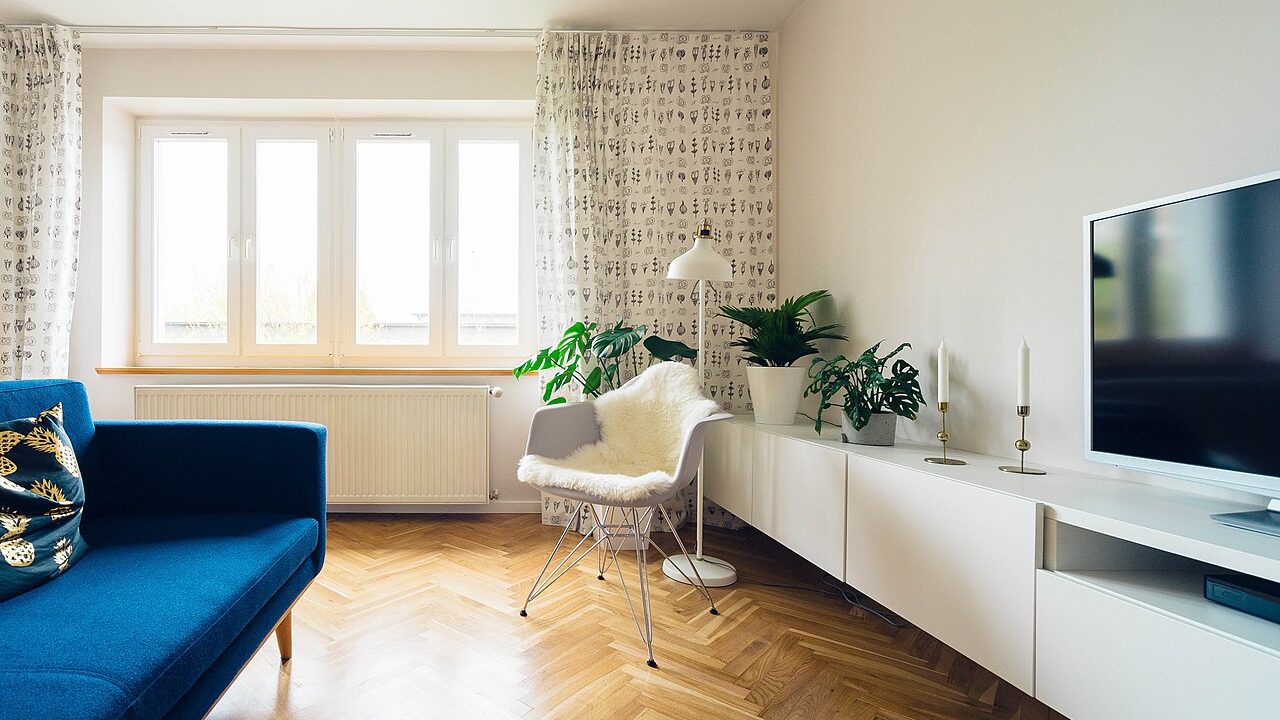
Turning a living room back into a living room at nine in the evening takes ninety seconds and one box with a lid. Everything else is decoration.
The room that does two jobs
Maya’s living room is 3.4 by 4.1 and holds a sofa, a low table, a bookshelf, and a desk. The desk is against the wall opposite the sofa.
During the day the room is an office with a sofa in it. In the evening it has to become a room where nobody is working.
She tried a folding screen for a month and gave up on it. The screen hid the desk and made the room smaller in a way she could feel.
Which traces actually register
She photographed the room at nine each night for two weeks to find out what read as work. The answer was not the desk, which she had expected.
Three things registered: an open laptop, a mug, and the chair pulled out at an angle. Everything else in the room was invisible in the photographs.
The desk itself read as furniture as long as it was clear. A clear desk against a wall is a table, and a table in a living room is normal.
A box with a lid
The box is 40 by 30 centimetres, sits under the desk, and has a hinged lid. It holds the laptop, the mouse, the notebook, and the headphone case.
The lid matters more than the box. An open box of work things is a work thing; a closed box is an object that happens to be there.
She chose a box that looks like it belongs in a living room rather than an archive. It cost twenty-two pounds and replaced three separate storage attempts.
The monitor question
The monitor is the one item that cannot go in the box, and it is also the most obvious work object. She tried leaving it and tried turning it away.
Turning it to face the wall worked better than covering it. A covered monitor is a thing under a cloth; a turned monitor is a black rectangle.
The black rectangle turned out to be less noticeable than she expected. At nine in the evening, with the lamp on, it reads as a dark panel.
The cable under the sofa
Her first desk had a cable bundle that ran down the wall and along the skirting. It was the only part of the setup that she could not put away.
She moved the socket to a point behind the sofa and ran one cable along the wall base. The visible part is now a single line that the eye ignores.
This took an electrician forty minutes and cost more than the box. It is also the change that made the room stop looking improvised.
Light as the eraser
The room has a ceiling light and two lamps, one at each end. The evening version uses the two lamps and never the ceiling.
Ceiling light makes the desk the brightest thing in the room, because it is directly under the fixture. Lamp light puts the brightest point at the far end, near the sofa.
She did not believe this mattered until she saw the photographs side by side. The desk looked like a workplace under the ceiling and like furniture under the lamps.
The ninety-second version
The full reset is four actions and takes about ninety seconds once it is a habit. Laptop in the box, chair turned, lid closed, lamps on.
The order matters because the lamp is the last thing and the most effective. Everything before it is preparation for the light changing.
She times it occasionally and it has never gone past two minutes. The four actions are the whole system, and everything else is optional.
What she refuses to hide
The bookshelf stays, including the work books, because a shelf of books is not evidence of employment. She also leaves the plant and the framed print.
The line she draws is between objects that imply a task and objects that imply a person. A book is a person; a stack of invoices is a task.
This is the distinction that makes the reset survivable over years rather than weeks. Hiding everything would mean hiding the room she actually lives in.
The guest who arrived at eight
A friend came for dinner on a Wednesday and arrived twenty minutes early. Maya was still on a call and the room was in its daytime state.
She ended the call, closed the laptop, and did the reset while the friend took off a coat. It took ninety seconds and the evening started properly.
The friend did not notice anything except that the room was pleasant. That is the correct outcome and it is also slightly unsatisfying.
Hiding is not the same as ending
The reset changes the room and does nothing about the day. She learned that in the first month, when she reset at nine and worked again at ten.
The box made the second session slightly more annoying, which turned out to be useful. Friction is the only thing that stops a ten o’clock restart.
So the reset is doing two jobs, one visual and one behavioural. The behavioural one is the reason it survives, and it is invisible in the photographs.
The room at ten o’clock
By ten the box is under the desk, the chair faces the bookshelf, and the lamps are the only light. The laptop is charging in the bedroom, which is the last trace.
The charging point in the bedroom was the cheapest part of the whole setup. It removed the one object that would otherwise sit by the sofa all evening.
At ten the room is a living room with a desk in it. That is the most she has been able to achieve in a one-bedroom flat.
Whether one room can be both
One room can be both, and it will never be equally good at either. The office version has a monitor in the wrong place and the evening version has a box.
The compromise she accepted is that setup and pack-down cost ninety seconds twice a day. That is three minutes daily, or about eighteen hours a year.
She has decided that eighteen hours is cheaper than a second room. The decision holds until she can afford the second room.
If a room can be an office or a living room but never both at once, how many minutes a day is the switch actually worth?