A footstool is the fix for short legs at a fixed-height desk
 RUTH WILLIAMS·5 min read·October 27, 2026
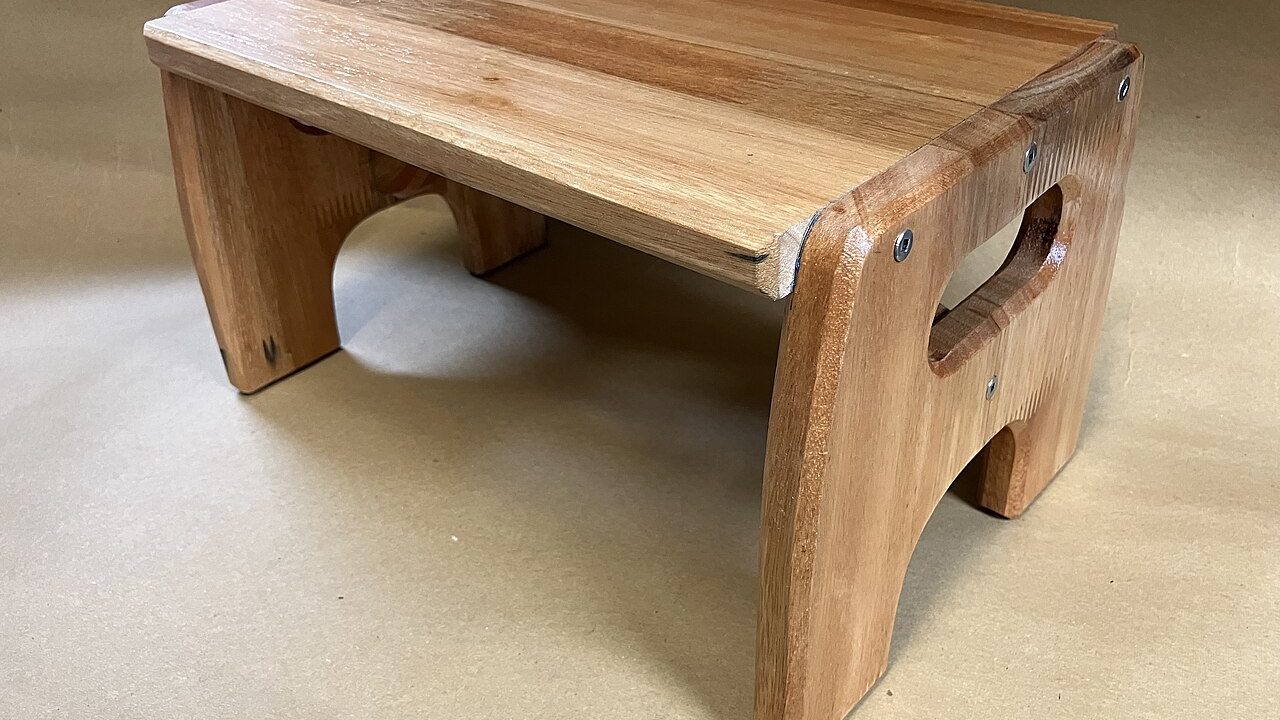
Most desk problems are solved by moving the desk, and a fixed desk removes that option entirely. Sofia is 1.58 m tall and rented a flat with a 74 cm desk screwed to the wall.
The desk that fits the average
Standard desks are 73 to 76 cm high because that suits a person of about 1.75 m. Sofia’s desk was at the low end and still 5 cm too high for her.
She could not change the desk and did not want to change the flat. The adjustable parts of the setup were the chair and the floor beneath it.
For two years she had used a cushion to raise the seat and let her feet hang. The hanging was the part she never solved.
The seat height the elbows demand
To keep her elbows level with a 74 cm desk, Sofia needed a seat at 56 cm. Her lower leg, from the back of the knee to the floor, measures 39 cm.
A 56 cm seat leaves 17 cm of air under her feet unless something fills it. The gap is the entire problem expressed as one number.
Taller colleagues at the same desk sit with their feet flat and their elbows low. The desk fits them without any accessory at all.
Why the feet leave the floor
The body needs three contacts to be stable: feet, seat, and, when typing, forearms. Remove the feet and the pelvis takes over the balancing.
The thighs slope down, the pelvis rotates back, and the spine follows into a curve. Sofia’s lower back ached by Thursday every week.
She had blamed the chair for two years. The chair was doing what a chair does when the floor is out of reach.
What a footstool changes
A stool restores the third contact and levels the thighs. The pelvis can then sit upright without muscular effort from the lower back.
It also changes the knee angle, which affects circulation in the calf. A 90-degree knee is the target, not a 70-degree one.
Sofia put a box under the desk as a test and felt the difference within an hour. The box was the wrong height and the right idea.
Choosing the height
The stool should fill the gap between the floor and the sole of the foot, no more. For Sofia that was 9 cm with her shoes on.
Most stools are sold at 10 to 15 cm, which is too tall for a short chair setting. Height matters more than the surface or the shape.
She measured with the shoes she actually wore, not the ones she wore to the shop. That detail changed the answer by 2 cm.
The stool that was too tall
The first stool she bought was 15 cm and pushed her knees above her hips. That reversed the pelvic tilt and brought the ache back.
A stool that is too high is worse than no stool, because it loads the thigh and compresses the back of the knee. Sofia returned it within a week.
The second was 8 cm high and adjustable by another 2 cm. That adjustability mattered more than the material, the finish, or the price.
The knee angle and circulation
A knee bent past 90 degrees compresses the vessels behind it and slows the return of blood. The foot goes cold before the leg complains.
Sofia noticed cold feet in the afternoons and had attributed it to the flat. The stool raised her knees to level and the coldness stopped.
This is a small effect that accumulates over a working day. It is also the kind of thing no product page mentions.
Where the stool sits
The stool should sit under the desk, not in front of the chair, so the feet can stay there while she rolls in. Sofia’s sat 5 cm too far forward.
A stool in the wrong place becomes a thing you kick, and then a thing you stop using. Position decides whether it survives the month.
She marked the floor with tape for a week, then removed the tape. By then the stool had found its place without her.
The chair’s seat depth
Short legs usually come with short thighs, and a deep seat pushes the knees forward. Sofia’s seat was 48 cm and her thigh was 42.
The gap behind her knees was negative, so the seat edge pressed on the calf. A cushion at the back of the seat shortened the depth by 5 cm.
This is the second half of the short-leg problem and it costs nothing. Most people buy a new chair before trying a cushion.
Cushion versus new chair
A new chair with a low seat range would have solved both problems at once. It would also have cost eight times what the stool and cushion cost.
Sofia tried three chairs in a showroom and none went below 45 cm with a shallow seat. The market for short users is thin.
The cushion and stool combination held for two years. It was uglier than a new chair and it fitted her body better.
The three-week test
Sofia gave the arrangement three weeks before judging it, because the first week felt strange. The strangeness was the pelvis learning a new position.
By week two the Thursday ache had gone and her feet were warm at 5 pm. By week three she had stopped thinking about the stool.
The only cost was floor space, which the desk had plenty of. The stool lived under the desk and was invisible from the door.
What the stool does not fix
The stool fixes the leg, and the leg was never the whole problem. Sofia’s monitor still sat 12 cm too high for her eye line.
Raising the seat had lifted her eyes, and the panel had stayed where it was. The neck ache arrived in month two.
Each fix in a fixed-height room reveals the next one, which is why the process takes months. The stool was the second of four.
If the desk is built for a body that is not yours, how many separate objects does it take to make it fit?