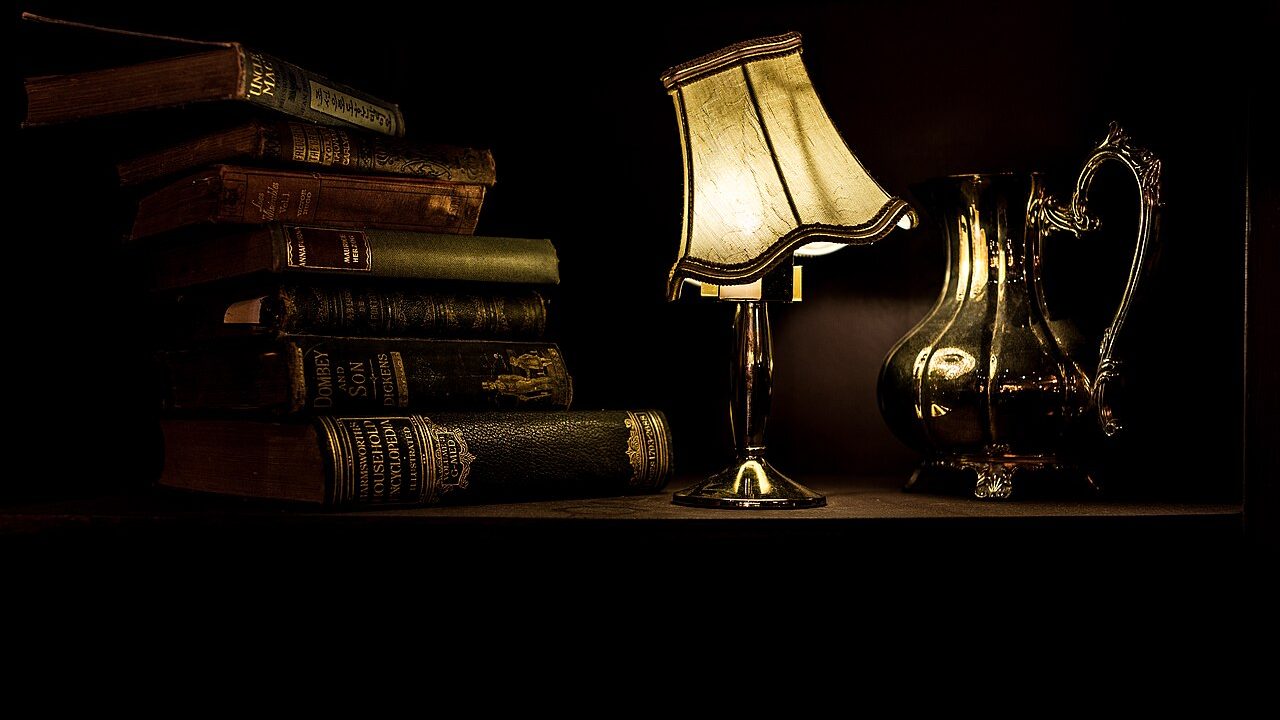
Lighting only the desk with a single lamp in a dark room
 RUTH WILLIAMS·5 min read·September 19, 2026
One lamp placed correctly lights a desk better than three placed evenly. The reason is direction, and almost every lighting purchase ignores it.
Why the ceiling light was the problem
Beatriz worked in a north-facing room with one pendant in the middle of the ceiling. The light arrived from above and behind her, which put her shadow on the keyboard.
The room was bright by any meter reading and unusable for reading paper. Brightness at the ceiling is not brightness at the task.
She bought a desk lamp expecting it to add light to the room. What it actually did was change where the light came from.
The one lamp rule
One lamp placed well beats three placed evenly, because a single source gives one shadow. Multiple sources at different angles cancel each other and flatten the desk.
Beatriz tried two lamps in the first week and put one away. The double shadow under her hand was worse than the dimness.
The rule is about direction and not wattage. A desk needs one clear source and a wall that is not much darker than the paper.
Placing it on the correct side
For a right-handed writer the lamp goes on the left, so the hand does not shade the nib. For a left-hander it goes on the right.
Beatriz is right-handed and had put hers on the right because the socket was there. Moving it across the desk solved the shadow in one motion.
The socket decided her lighting for two years. An extension cable would have cost less than the lamp she bought to compensate.
Height against the monitor top
The lamp head should sit at or slightly below the top edge of the monitor. Above that it shines into the eye or reflects in the panel.
Beatriz had hers on a stack of books at 55 cm, well above the screen. The reflection showed in the panel as a bright oval.
Dropping the head to 40 cm removed the oval and kept the desk lit. Height is the adjustment people make last and should make first.
The shadow of your own hand
A lamp close to the working hand makes a short dark shadow. A lamp far away makes a long soft one that covers the page.
Beatriz moved hers from the far corner to 40 cm from her notebook. The shadow shortened and her writing speed changed within a day.
Distance from the task matters more than the angle printed on the box. That angle assumes a desk of a size she did not have.
Contrast between desk and wall
A pool of light on a desk with a dark wall behind forces the eye to adapt constantly. The pupil opens for the wall and closes for the paper.
Beatriz’s wall was deep green and absorbed most of the lamp output. She painted the wall behind the monitor a warm off-white.
The desk did not get brighter, but the room stopped feeling like a cave. Contrast is what the eye reads as comfort.
Color temperature and the evening
A lamp at 4,000 K at ten in the evening tells the body it is still afternoon. Beatriz’s sleep log changed when she switched to 2,700 K after eight.
She kept a second bulb rather than a second lamp, which cost less and stored in a drawer. The swap takes ten seconds.
Temperature matters more at night than brightness does. A dim cold lamp is worse for sleep than a bright warm one at the same output.
What the lamp must not do to the screen
Any lamp within the panel’s angle of view reflects in it unless the panel is matte. Beatriz’s screen was glossy and showed everything.
She moved the lamp forward until the reflection fell outside her seated sightline. The fix was 15 cm of travel and not a new screen.
A hood or a tilt can help, but placement costs nothing. Try the lamp in three positions before buying anything else for the desk.
The wall behind the monitor
The wall the screen faces is what the eye sees between tasks, and it should be the second brightest surface. Beatriz’s was the darkest.
She added a small uplight behind the monitor at low output. It lifted the wall without putting a single reflection on the screen.
This is the cheapest lighting change in any room and the least discussed. It costs one small fixture and no ceiling work.
Two lamps and why she went back
In winter Beatriz added a second lamp for the dark afternoons and disliked it. The two pools overlapped and made a bright band across the middle of the desk.
She kept the second lamp and pointed it at the wall instead of the desk. The room got brighter and the desk kept one shadow.
Adding light to a room and adding light to a task are different jobs. Doing both with one fixture is why the first attempt failed.
The camera and the lamp
A lamp in front of the face flattens the features on a call, and one behind leaves the face in shadow. Beatriz put hers at 45 degrees to the side.
At that angle the light modelled one side of her face and left the other readable. Colleagues said she looked less tired, which was the light.
The fixture that lights the desk can light the face if the desk faces the right way. That is a room decision, not a lamp decision.
Testing with a sheet of paper
Put a sheet of white paper where you read and look for a hard shadow across it. If the edge is sharp, the source is too close and too small.
Beatriz’s shadow had a hard edge at 30 cm and a soft one at 60. She settled at 45 cm and stopped moving the lamp every morning.
Paper is a better test than a light meter because it shows what the eye will do. It costs nothing and takes a minute.
If one lamp can only do one job in your room, should it light the paper in front of you or the wall behind the screen?