Chair height versus desk height: saw the legs or replace the chair
 RUTH WILLIAMS·5 min read·June 28, 2026
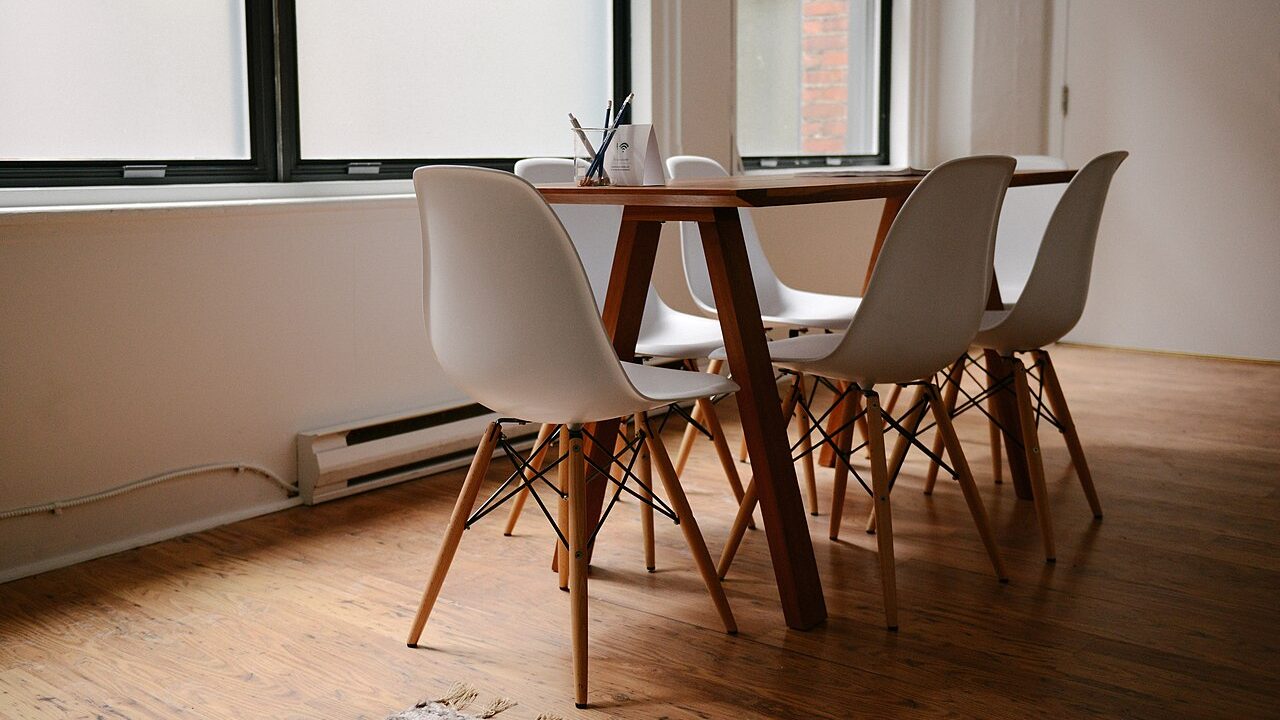
A chair too low for the desk is a cheaper problem than a desk too high for the room. Callum learned this in a rented flat where nothing could be replaced.
The ten centimetres nobody measured
The flat came with a desk built into an alcove, 75 cm from floor to surface. The landlord called it a workspace; the tape measure called it a kitchen counter at sitting height.
Callum’s second-hand chair had a seat at 45 cm, which put his elbows at 63 cm. Every keystroke lifted his wrists ten degrees above the keyboard.
He spent three months blaming the keyboard. The ten centimetres between his elbow line and the desk surface never entered the conversation.
What the elbow line decides
Seated elbow height is the only measurement that matters for a keyboard. It sits roughly 15 to 20 cm above the seat, depending on torso length.
The desk should land at or just below that line, so the forearm slopes down a few degrees. Higher than the line, and the wrist extends to reach the keys.
Callum’s line was at 63 cm and his desk at 75. That gap became 12 cm of wrist extension held for seven hours a day.
Why raising the chair is reversible
The obvious fix is to bring the elbows up to the desk instead of the desk down to the elbows. A cushion and a gas lift can add 10 cm in an afternoon.
Nothing is destroyed, nothing is measured twice, and the change can be undone if the guess is wrong. That matters in a rented flat.
Callum raised the seat to 57 cm on the first evening. His wrists flattened immediately, and his feet stopped touching the floor completely.
The dangling feet problem
A seat at 57 cm leaves most people’s feet 8 to 12 cm above the ground. The thighs then tilt down and the pelvis rolls back with them.
Weight moves onto the front edge of the sitting bones, and the lower back takes a load it was not built to hold. The wrists improve and the spine pays.
This is the trade the chair-first route always makes. It buys a flat wrist with a floating foot, then asks you to solve the foot.
What a 12 cm footrest does
A footrest is not comfort equipment; it closes the loop the raised seat opened. It restores the thigh angle and takes the pelvis back to neutral.
Callum bought a 12 cm wooden wedge for the price of a sandwich. The feet landed flat, the knees dropped to hip level, and the wrists stayed flat.
Three variables were now correct at once: elbow, thigh, and foot. The desk had not moved, and the chair had not been replaced.
Cutting the legs is a one-way decision
Sawing 10 cm off the desk legs solves the same problem with one cut. It also removes every future option in a single afternoon.
The cut is hard to make level, harder to hide, and impossible to reverse. A desk that sits 10 cm low is a desk for one chair height only.
Callum measured twice and put the saw away. The desk belonged to the landlord, and the deposit was larger than the whole chair.
The resale value of a sawn desk
A cut desk also loses its resale price, and that matters more than it first sounds. Second-hand buyers bring a tape measure before they pay.
The arithmetic usually favours the reversible route: a footrest costs less than the loss on a desk. The exception is a desk nobody will ever move.
Callum’s desk could not be sold at all, because it was screwed to the wall. That removed resale from the calculation and left the deposit.
When the desk is built in
Built-in furniture changes the decision, because the desk is part of the room. Cutting it is a modification, not a purchase, and usually needs permission.
The reversible route is also the polite route here. A raised chair and a footrest leave the flat exactly as it was found.
That constraint pushed Callum toward the chair, but it also hid a second problem. Raising the seat lifted his eyes 12 cm closer to the monitor.
The keyboard tray as a third option
A clamp-on keyboard tray lowers the keys without touching the desk. It buys the same 10 cm and keeps the surface for everything else.
The cost is depth: the tray pushes the keyboard forward and eats the space where a wrist rest would sit. Shallow desks lose more than they gain.
Callum tried one and returned it in four days. At 60 cm deep, the tray left no room for the monitor stand behind it.
What the monitor then demands
Every change to seat height moves the eye line, and the monitor has to follow. A screen set for a 45 cm seat is too low for a 57 cm one.
Callum stacked two hardback books under the stand and gained 9 cm. The top of the panel landed roughly a hand’s width above the desk.
The books were a temporary answer that lasted the whole year. They cost nothing and were, in practice, exactly the right height.
Two weeks of aching shoulders
The new position felt wrong for about ten days. Muscles used to a collapsed posture complain when they are asked to hold a neutral one.
Callum’s shoulders ached in the first week and stopped in the second. The old arrangement had been comfortable in the way a slouch is comfortable.
This delay is why so many chair-first fixes get abandoned in week one. The first week is not evidence about the final month.
The cost of the two routes
The chair route cost a wedge, a cushion, and two books. The cutting route would have cost a saw, a deposit, and a desk.
Neither route fixes a desk that is too high for the room’s depth. Callum’s monitor still sat 55 cm from his eyes, which is a separate problem.
What he gained was a flat wrist and a flat foot for under twenty pounds. What he gave up was the idea of a single correct desk height.
If the desk cannot be moved and the chair can be, which one is really the piece of furniture that needs replacing here?