When the room is too small to sit back from the screen
 RUTH WILLIAMS·5 min read·June 24, 2026
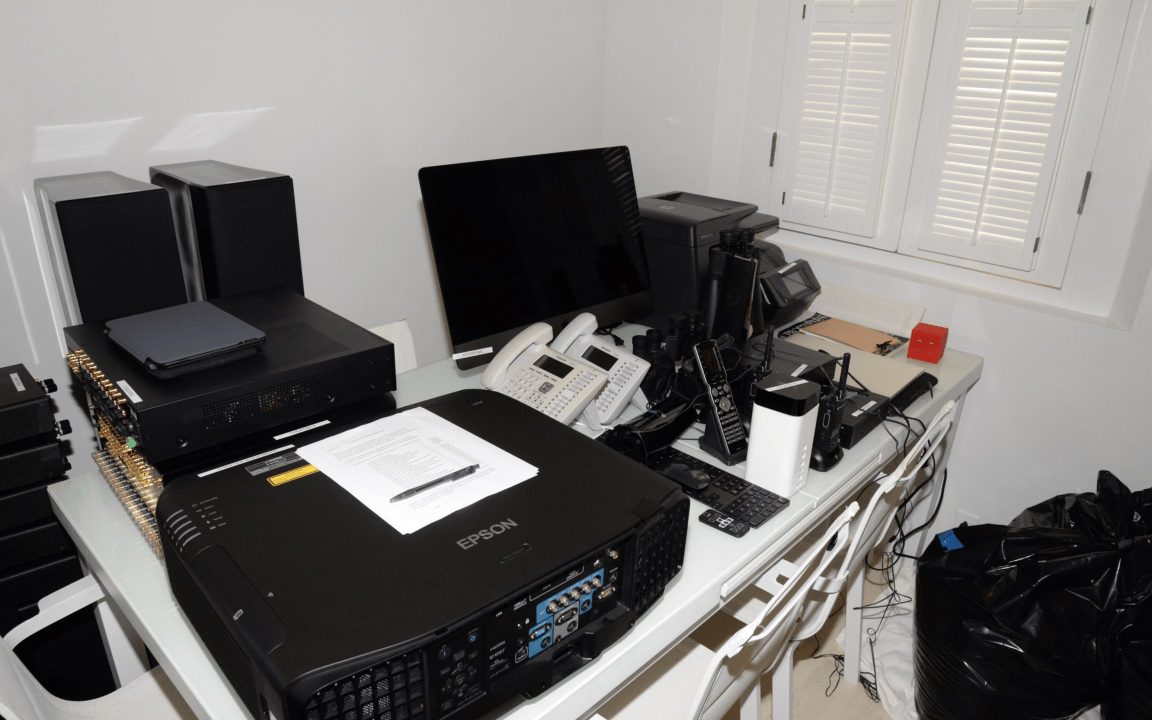
The recommended viewing distance for a desk screen is 50 to 70 cm, and a box room often makes 40 the maximum. Bea’s desk stood against a wall in a 2.4 m room.
The room sets the distance
Screen distance is usually discussed as a screen problem. In a small flat it is a floor plan problem, and the floor plan wins.
Bea’s second bedroom was 2.4 m wide and held a bed, a wardrobe, and a desk. The desk faced the wall with 55 cm of clearance behind the chair.
A 24-inch panel on that desk sat 45 cm from her eyes. No adjustment to the panel could produce another 15 cm of distance.
What forty centimetres does
Closer viewing raises the demand on the focusing muscle and on the convergence of the eyes. Both work harder at 40 cm than at 65.
The muscle can hold it; the issue is holding it for six hours without a change. Sustained contraction is what produces the ache behind the eyes.
Bea’s headaches arrived at 3 pm and sat behind her right eye. She assumed the screen was too bright and turned it down.
The wall behind the desk
The wall is the constraint, and the first question is whether the desk must face it. Bea had never tested the other orientation.
Turning the desk 90 degrees put her side-on to the window and gave 90 cm behind the chair. The desk no longer fitted the alcove.
The room did not get bigger; the desk stopped using the wall as an anchor. That is the only lever a small room offers.
Turning the desk ninety degrees
The diagonal is longer than either wall, which is why corner desks exist. A 2.4 by 2.8 m room has a diagonal of 3.7 m.
Bea put the desk across one corner and gained 20 cm of viewing distance. She lost the shelf that had hung above the desk.
The shelf went to the hallway and the books went into a box. This is the shape of nearly every small-room improvement: a trade, not a gain.
A smaller panel at higher density
A 22-inch panel at 1080p can sit closer without the pixels becoming visible. Density buys distance in a way that diagonal does not.
Bea tried a 22-inch screen at 50 cm and found the text smaller than before. The gain in distance was cancelled by the loss in size.
The net effect was neutral for her, and she returned the panel. Distance and legibility are two ends of the same measurement.
Type size as effective distance
Increasing the font size moves the text closer without moving the screen. That is the same optical result through a different mechanism.
Bea set her editor to 16 point and her browser to 110 per cent. The screen stayed at 45 cm and the reading distance effectively grew.
The cost is fewer words on the screen, which means more scrolling. For Bea the scrolling was cheaper than the daily headache.
The twenty second look away
Looking at something far away relaxes the focusing muscle, but only if the something is genuinely far. A wall 60 cm away is not far.
Bea’s window looked onto a courtyard 15 m away, which was enough. Twenty seconds of that every twenty minutes reduced the 3 pm ache.
The rule is often quoted as 20-20-20 and rarely followed, because it needs a target. Without a distant object it becomes a blink.
Window light and glare
A screen facing a window competes with a bright background, and the eye adapts to the brightest thing. Bea’s desk had faced away from the window.
Turning it side-on put the window at her left shoulder, which was better. It also put a glare band across the lower half of the panel.
A cheap blind fixed the band and the panel brightness went back to 40 per cent. Neither change altered the viewing distance at all.
The monitor arm that buys ten centimetres
An arm replaces the stand and lets the panel hang over the desk’s rear edge. That can add 10 cm of distance without a bigger room.
Bea clamped one to the desk and pushed the screen back until it almost touched the wall. Her keyboard moved forward to compensate.
The arm cost more than the blind and less than a new panel. It produced the only real distance gain in the whole experiment.
What Bea measured after a month
She kept a note of headache days rather than pain scores. Month one had eleven; month two had four, after the arm and the blind.
The distance went from 45 to 58 cm, which is still well short of the recommended minimum. The improvement was proportional rather than complete.
She also blinked more, because the arm put the screen below eye level. That was an unintended gain from a height change.
The cost of the corner
The corner arrangement cost her the shelf, the clear floor, and a straight path to the door. The room felt smaller afterwards.
This is the trade small-room workers rarely hear about. Distance is bought with floor area, and floor area is the thing in short supply.
Bea kept the arrangement for eight months and then moved flat. The next room was 3.1 m wide and the problem disappeared entirely.
When the room cannot be fixed
Some rooms cannot give another 15 cm, no matter how the furniture is turned. In those rooms the answer is type size and breaks, not geometry.
That is a worse answer, and it should be described as one. The recommendation assumes a room with slack that many flats do not have.
Bea’s second room made the first year look like a lesson in floor plans. She kept the arm and the blind and gave away the corner desk.
If the room cannot give another fifteen centimetres of distance, is the real problem the screen, the desk, or the flat itself?