What a project board must show a reader who was not there
 RUTH WILLIAMS·5 min read·October 15, 2026
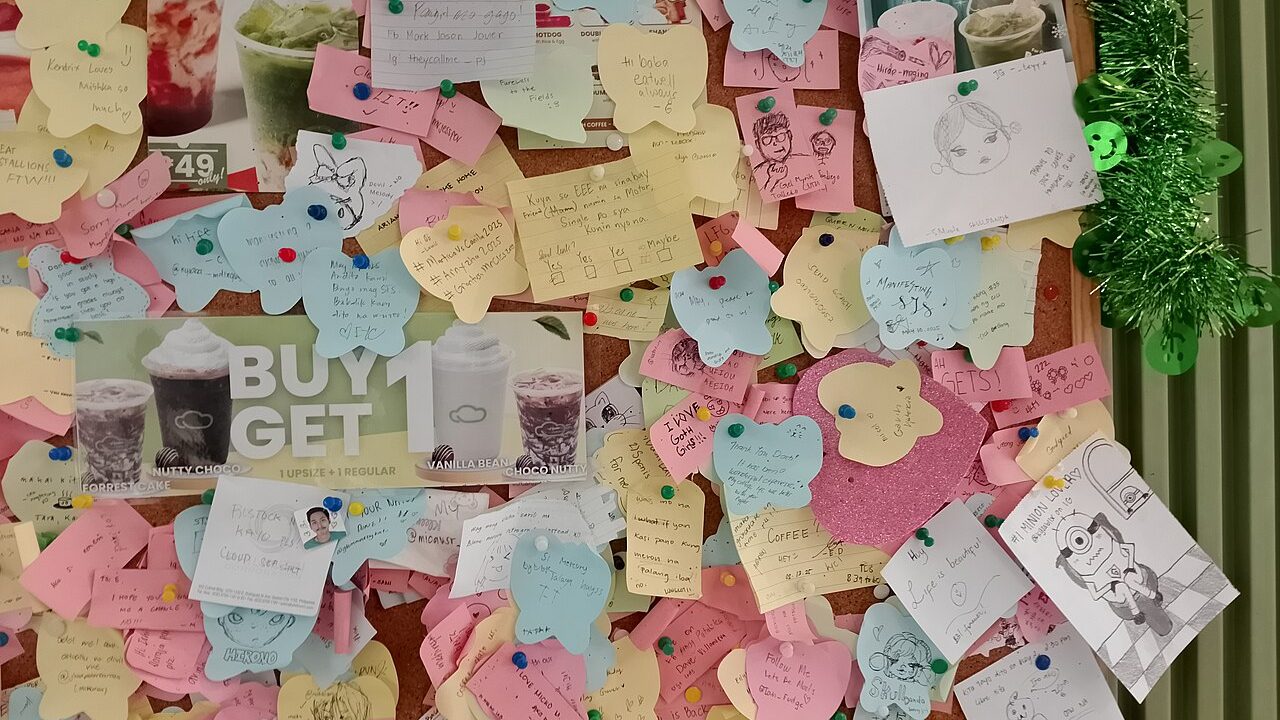
A project board is readable when a stranger can tell what is live, what is stuck, and what is waiting on a decision. Most boards tell none of that.
The board Nadia could not read
Nadia joined in April and spent her first afternoon with sixty cards on a board. The cards were arranged in five columns. One column held thirty-one of them.
She could see that thirty-one cards sat in progress. That told her nothing about any individual card. The column was a holding area, not a status.
By the end of the day she had asked three people the same question. Which of these is actually being built now. All three gave different answers.
What the cards assumed
Most cards had a title of four words, an assignee, and a label in an unexplained colour. The colour had been introduced two years earlier. Nobody remembered the key.
The titles assumed the reader knew the product. A card reading billing v2 meant nothing without six months of context. Nadia had six hours.
Every card was written for the person who created it. That is the definition of an unreadable board. It is also the default state.
Status as a sentence, not a colour
The first change was to require one sentence at the top of each active card. The sentence describes the current state. It is not a summary of history.
Sentences like waiting on legal review since Tuesday survive translation. Colours do not survive at all. Half the team could not distinguish two of them.
A reader who cannot see the board still needs the sentence. That is why it belongs in the card rather than the column. Columns are a view; cards are the record.
The card that explains why it exists
Every card above a certain size got a second field. The problem this solves, in one sentence a customer would recognise. The field is capped at one sentence.
That field lets a newcomer judge priority without asking. A problem statement implies a consequence. A feature name implies nothing at all.
Nadia read eleven of them in twenty minutes. She stopped needing the product history in her head. That had been the largest cost of her first week.
Owners and the myth of the unowned card
Seven cards had no assignee. All seven had been moving slowly for weeks, and that was not a coincidence. Nobody was surprised by the list.
An unowned card is not a shared responsibility. It is a decision that has not been made about who cares. The team had been avoiding that decision politely.
The team closed four of them and assigned three. The board lost a category of permanent ambiguity. The column count dropped without anyone doing any work.
Dates that mean something
The board had due dates on about half the cards. They were entered by whoever felt like it. None of them were trusted by anyone.
They replaced due dates with one field. The date this must be finished for something else to start. Most cards turned out to have no such date.
That is a real constraint rather than an aspiration. It is the only date a stranger can reason about. An aspiration date is a wish with a calendar entry.
Where the definition of done lives
Done meant something different on every card. A card in the last column could be a prototype or a shipped feature. Readers had to ask which.
The team wrote one definition on a page and linked it from the board header. That took forty minutes. It was the cheapest change of the whole exercise.
Without it, the last column is where work goes to be forgotten politely. Cards sit there for weeks and nobody asks. The column looks like progress.
Reading a board in ten minutes
The test they set was simple. A person outside the team should be able to describe the next two weeks after ten minutes. Nothing about the board was explained to them first.
Nadia did it in eight minutes. Her only question was about a dependency between two cards. That dependency was real and undocumented.
The question was useful because nobody on the team had noticed it. A readable board surfaces things the team has stopped seeing. That is the point of the exercise.
The card written for a stranger
The best card on the board was written by an engineer just back from holiday. He had been away for the previous sprint. He wrote it as if explaining to himself.
That produced a clearer card than any template had. The framing became the informal standard. Write for the version of you who has forgotten everything.
Templates produce compliance. A named reader produces sentences. The engineer had a reader in mind because he had been one a week earlier.
What the board cannot hold
A board cannot carry reasoning. It can say what is happening, not why this approach beat two others. Every attempt to add the why produced a paragraph.
Nobody read those paragraphs and everybody copied them forward. The cards accumulated bad prose for a year. Then the fields were cleared.
The reasoning went to linked pages instead. The card kept one link with the decision date attached. The date is what makes the link trustworthy.
Cleaning the board before the hire arrived
Two weeks before Nadia started, the team spent an hour on the board. They closed fourteen abandoned cards and merged six duplicates. The count fell from sixty to forty.
That hour did more for her onboarding than the welcome document. The document had good intentions and no specifics. Nobody had read it since the last hire.
Boards decay quietly. A card nobody has touched in three months is usually a decision nobody wants to make. Closing it is a decision too.
What Nadia asked in week two
Her only structural request was a column for work blocked outside the team. That work had been sitting in progress for weeks. It looked like slow work.
The column now holds four cards. It is the first place anyone looks in a Monday review. That review used to start with the oldest card.
She asked for it because she had spent a week unable to tell stuck work from slow work. The distinction was obvious to everyone who already knew.
If a new hire read your board for ten minutes, what would they still have to ask you in person, and why is it not on a card?