Headphones or speakerphone: who hears you, and who tires first
 RUTH WILLIAMS·5 min read·October 23, 2026
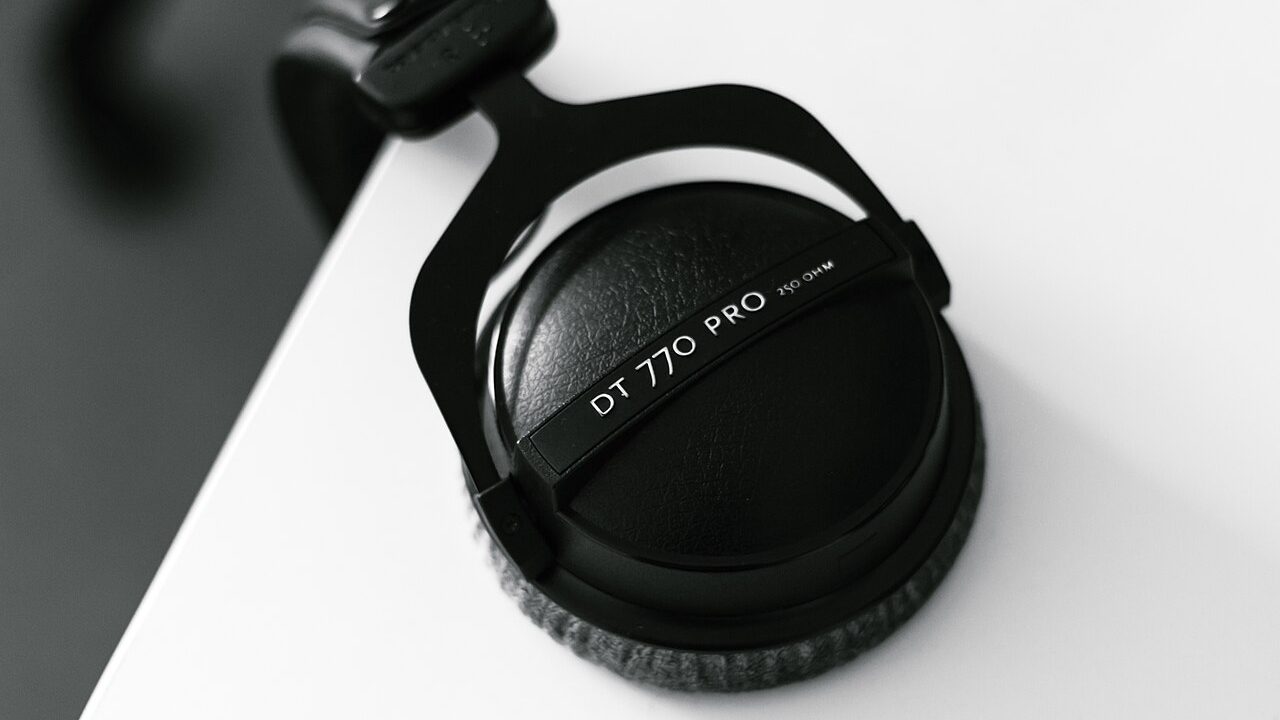
A speakerphone is easier on the ears and harder on everyone else in the call. Headphones trade comfort for isolation, and isolation is usually the point.
The meeting that exposed it
Yusuf took a planning call on a small speaker puck while his flatmate cooked in the next room. Nobody on the call mentioned the extractor fan.
Afterwards a colleague sent him the recording, which is standard on that team. The fan was audible under every sentence he spoke for forty minutes.
He had not heard it, because the puck’s speaker was quiet and his ears were full of the meeting. That asymmetry is the whole problem.
What the speakerphone does to your own voice
A speaker plays the other participants into the room, and your microphone hears them. Echo cancellation removes most of it and damages your voice doing so.
The damage shows as clipped word endings and a slight warble on sustained sounds. It is subtle on a laptop and obvious on a good headset at the other end.
Yusuf’s team tolerated it because everyone was doing the same thing. A team-wide problem is still a problem, and it compounds over a long meeting.
What headphones hide from you
Headphones remove the acoustic path between speaker and microphone, so cancellation has nothing to do. Your voice arrives clean because the loop is broken.
That also means you cannot hear your own room. The microphone may still be picking up a fan, a road or a fridge.
Yusuf’s fan was inaudible through headphones and loud on the recording. Isolation had solved one problem and quietly hidden another one entirely.
The listener’s side of the trade
A colleague on headphones hears the room, the keyboard and the fan, all at once. A colleague on a speaker hears a compressed mix of the same things.
Neither is pleasant, but the headphone listener can localise the noise and finds it more distracting. The speaker listener gets a smoother, duller version.
Yusuf’s colleague Bea said she preferred the speaker days. She was not hearing him better; she was hearing the noise less clearly.
Echo and the double-talk problem
When two people speak at once on a speakerphone, cancellation struggles and one voice gets cut. The result is a conversation where nobody can interrupt.
Yusuf noticed that he had stopped interjecting at all in larger meetings. He waited for gaps instead, which made him sound slower than he is.
Headphones removed the echo path and the interruption returned. It was a behavioural change he had not expected from a piece of equipment.
Fatigue from wearing something for six hours
Over-ear headphones clamp the skull and warm the ears, and after four hours the pressure is noticeable. Yusuf began lifting one cup during long calls.
Lifting a cup breaks the seal and changes the bass, but it does not break the microphone. He kept doing it and his ears stopped aching.
In-ear models avoid the clamp and introduce a different problem, which is a sealed ear canal for eight hours. Neither design is comfortable indefinitely.
The shared-room problem
A speaker broadcasts the meeting into the room, which is fine alone and wrong with anyone else present. Yusuf’s flatmate learned his colleagues’ names before meeting them.
Headphones keep the meeting private and make the room usable by two people at once. That is the argument that finally settled it for him.
The cost is that he now misses the doorbell and the flatmate has to wave. Small domestic frictions accumulate in ways call quality metrics never show.
When the speaker is the right choice
For a solo call in a closed room, a speaker is better, because it leaves the ears free and the voice natural. The echo path is the only cost.
It is also better for anyone with ear pain or a hearing aid, and for calls where you need to hear the room. These are not edge cases.
Yusuf keeps the puck for one-to-one calls in the morning, when the flat is quiet. He switches to headphones when the building wakes up.
The microphone in the headset
A headset microphone sits a few centimetres from the mouth, which is the advantage a speaker can never match. It rejects the room by geometry alone.
The boom also picks up breath noise if it sits directly in front of the lips. Yusuf moved his to the corner of his mouth and the plosives softened.
Cheap headset microphones sound thin and pick up cable rustle. A wired connection removes the rustle and a foam cover removes most of the wind.
What his flatmate said
She told him the speaker days were the ones she could follow from the kitchen. She knew more about his project than she wanted to.
That was the clearest evidence he had that the speaker was not neutral. It changed the room for everyone in it, not just the call.
He had been judging the setup by how it sounded to him. The people around him were part of the system and had no settings to adjust.
The setup he settled on
Headphones for anything over twenty minutes, the puck for short calls when he is alone. The rule is about duration and occupancy, not about quality.
He bought a second pair of lighter headphones for the afternoon, which cost less than a single microphone. Comfort turned out to be a time-of-day problem.
The heavier pair stays for morning calls, when his ears are fresh. Two pairs is a strange solution that works better than one expensive pair.
How to choose in ten minutes
Record yourself on the speaker and on the headphones, then listen to both on headphones. The difference will be obvious in the first ten seconds.
Then ask whether anyone else is in the room, and how long the call runs. Those two facts decide more than any specification.
Yusuf’s answer changed by the hour, which is why he keeps both within reach. A single answer would have been wrong half the day.
If the choice depends on who else is in the room, why is it usually sold as a question about sound quality?